China Top 10 Aluminium Bifold Door Suppliers?

Time:2026-11-26 Author:Ethan
0%

Choosing among China’s top 10 aluminium bifold door suppliers takes more than comparing glossy catalogs. A wide glass opening looks simple until the panels stack unevenly, the rollers catch, or rain finds a gap. Aluminium Bifold Doors rely on careful engineering, consistent fabrication, and hardware matched to the door’s size and weight. Small details matter.

Architect Ludwig Mies van der Rohe’s often-quoted line, “God is in the details,” offers a useful lens for this search. It was not a comment about bifold doors, but it fits their design: a sturdy track, aligned hinges, and clean corner joints can shape everyday performance. The quote is a prompt, not proof. Buyers still need evidence.

This guide compares suppliers by product range, manufacturing capability, customization, quality controls, and export experience. It also points to practical questions: What aluminium profiles are used? How are rollers and locks tested? Can the supplier provide clear drawings, finish samples, and project references? A polished showroom image cannot answer those questions. Ask for specifics.

No supplier is right for every project. A coastal home, a compact balcony, and a commercial opening place different demands on glazing, finishes, and panel dimensions. Even a promising quote may omit installation conditions or service expectations. That part deserves a second look. The shortlist ahead is a starting point for careful due diligence, not a substitute for checking specifications, samples, and communication before placing an order.
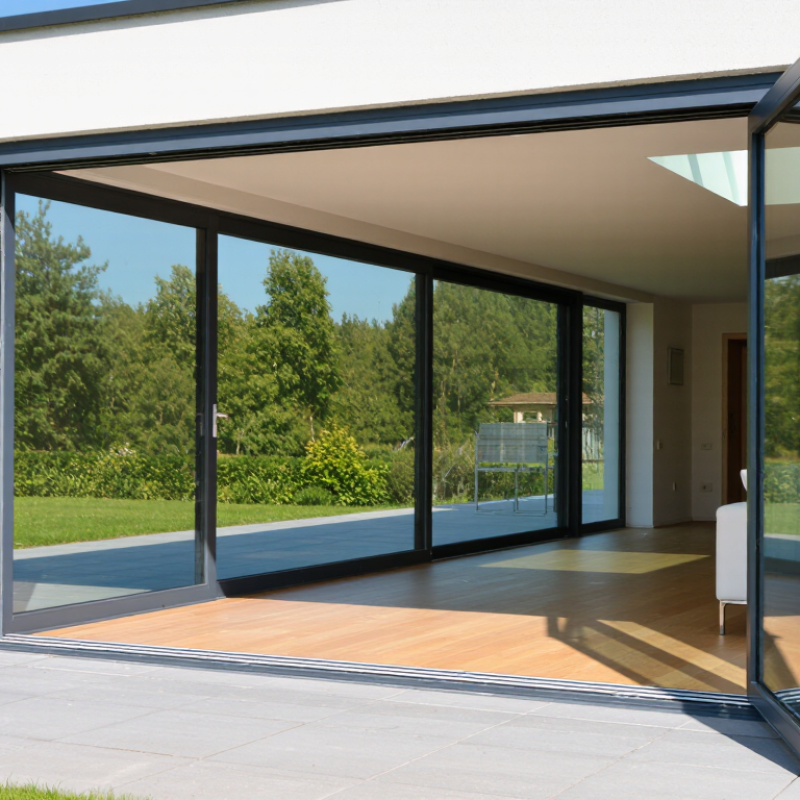
China Top 10 Aluminium Bifold Door Suppliers?

What Aluminium Bifold Doors Are and How They Work

Aluminium bifold doors consist of multiple glazed panels connected by hinges. When opened, the panels fold and slide along a track, gathering near one side of the opening. A bottom or top guide keeps them aligned, while rollers carry much of the moving weight. Closed, the panels meet at the frame and use seals and locking points to limit drafts and improve security.

The details matter. Panel weight, track quality, hinge adjustment, and installation affect how smoothly the door moves. Thermal performance depends on the whole assembly, including glass, frame, seals, and installation—not aluminium alone. The U.S. Department of Energy’s Energy Saver guidance estimates that windows can account for 25–30% of residential heating and cooling energy use. Large glazed openings deserve careful attention. A good-looking door can still feel cold near the edges.

The International Energy Agency’s 2024 Global Status Report for Buildings and Construction states that building operations use about 30% of global final energy. This figure covers buildings broadly, not bifold doors specifically, but it shows why envelope performance matters. Look for documented whole-door thermal ratings, not just claims about the frame. Also check drainage paths and track cleaning access. Small details. In practice, even a well-specified system may disappoint if the opening is uneven or the seals are poorly fitted.

What Aluminium Bifold Doors Are and How They Work

Aluminium bifold doors use hinged panels that fold together and move along a track. The chart shows the number of connections between adjacent panels in a simple folding set.

For a set of N connected panels, there are N−1 connections between adjacent panels. This count refers to panel-to-panel connections, not the number of individual hinges or frame pivots.

How China’s Aluminium Bifold Door Supply Market Is Structured

China Top 10 Aluminium Bifold Door Suppliers?

How China’s Aluminium Bifold Door Supply Market Is Structured

China’s bifold-door supply chain spans aluminium smelters, extrusion plants, system fabricators, glass processors, and export traders. These roles may sit within one company or across several factories. For buyers, the distinction matters: the firm quoting the door may not produce its profiles, hardware, or insulated glass.

Upstream capacity is substantial. The International Aluminium Institute’s 2023 production statistics put China’s primary aluminium output at roughly 41 million tonnes, out of about 70 million tonnes globally. This signals a deep materials base, not a guarantee of consistent door quality. Fabrication standards, profile-wall thickness, corner assembly, rollers, and drainage details still vary. Ask for drawings and component specifications, not only catalogue images.

Demand also shifts with construction cycles. China’s National Bureau of Statistics reported that new housing starts fell 20.4% in 2023. That figure covers housing construction, not bifold doors specifically, but it helps explain why suppliers may differ in export focus and order flexibility. Not all are alike. Some focus on made-to-order projects; others rely on standard sizes and larger batches. A practical supplier review should check factory control, sample tolerances, packing methods, and replacement-part support. One caveat: customs categories can group different aluminium doors together, so trade totals do not reveal bifold-door sales alone.

Criteria for Evaluating Chinese Bifold Door Suppliers

When comparing Chinese aluminium bifold door suppliers, look beyond catalogue photos. Ask for alloy specifications, profile thickness, surface-finish options, and hardware details. A clear quotation should identify what is included, such as tracks, handles, seals, and installation guidance. Details matter. If a supplier cannot explain how panel size affects stability, request a written technical response before comparing prices.

Review evidence of manufacturing quality, not just claims. Ask for recent project photos, inspection records, and samples showing corner joints, drainage paths, and gasket placement. Check whether the supplier can provide drawings and confirm measurements before production. A smooth sample is useful, but it cannot prove consistent quality across a full order. Ask how defects are recorded and resolved. Get the process in writing.

Communication and delivery planning deserve equal attention. Confirm response times, production lead time, packaging method, and the documents supplied with the shipment. A low quote may omit export packing or custom dimensions. Compare like-for-like specifications. Ask for references from projects with similar climate and opening sizes, while remembering that one successful installation is not a guarantee. I would also test the supplier’s answers with a specific scenario, such as a wide opening exposed to wind. Hesitation is not proof of poor quality, but vague replies should prompt more questions.

Profiles of 10 Notable Aluminium Bifold Door Suppliers in China

China’s aluminium bifold-door supply base is best assessed by capability, not catalogue photos. A useful ten-profile comparison covers integrated extruders, thermal-break specialists, slim-frame makers, and oversized-panel fabricators. It should also include export-focused plants, hardware integrators, automated workshops, custom-finish shops, project-engineering teams, and OEM-oriented factories. Small details matter. Check whether each supplier handles design, extrusion, fabrication, and final assembly in-house.

The 2023 Global Status Report for Buildings and Construction from UNEP and GlobalABC attributed 37% of global energy- and process-related carbon emissions to buildings and construction in 2022. That figure does not measure bifold doors, but it underlines why thermal performance deserves scrutiny.

Compare stated U-values, air and water resistance, wind-load results, glazing options, and test documentation. Ask for drawings showing threshold height and drainage paths. A polished sample can mislead; request a project-specific quotation and written tolerances. Also confirm production lead times, spare-hardware availability, and who handles installation questions. Supplier claims are easier to compare when specifications use the same test conditions.

How to Compare Product Quality, Pricing, and Export Services

When comparing China’s aluminium bifold door suppliers, look beyond frame thickness and catalogue photos. Ask for test reports covering air leakage, water penetration, and wind resistance, then check that the tested configuration matches your panel size and hardware. A polished sample helps, but it proves little about batch consistency. Small details matter.

Thermal performance deserves close attention. The U.S. Department of Energy’s Energy Saver guidance says windows account for about 25%–30% of residential heating and cooling energy use. The figure is not a door-specific rating, but it shows why glass specification, seals, and installation details matter. Request glass build-up, U-factor, and solar heat gain data, and compare like with like. A cheaper quote may use different glazing or omit screens, handles, and installation accessories. That is not enough.

Compare pricing line by line, including packaging, tooling, spare parts, and shipping terms. UNEP’s 2023 Global Status Report for Buildings and Construction estimates buildings use 34% of global energy demand; it is broad sector context, not proof that one door saves energy. For export service, verify drawing approval steps, production lead time, carton protection, and document support. Ask how damaged panels are handled. I would also request references for similar climates and project sizes. One point can be missed: a fast reply is not the same as reliable follow-through.

China Top 10 Aluminium Bifold Door Suppliers? - How to Compare Product Quality, Pricing, and Export Services

Use these ten checkpoints to compare shortlisted suppliers. This is an evaluation checklist, not a verified supplier ranking; company-specific prices, certifications, test results, and service capabilities should be confirmed directly.

No. Comparison Area What to Compare Evidence to Request Why It Matters
1 Aluminium profile alloy and temper Specify the alloy and temper, such as 6063-T5 or 6063-T6, and compare profile dimensions and wall-thickness drawings. Profile drawings, material specifications, and a sample or inspection report. 6063 is commonly used for architectural aluminium extrusions. The stated grade alone does not establish the performance of the complete door system.
2 Finish and corrosion protection Compare finish type, colour, gloss, coating thickness, pretreatment, and any stated performance standard. Written coating specification, sample, and test documentation relevant to the specified finish. AAMA 2603, 2604, and 2605 are different performance specifications for organic coatings on aluminium extrusions and panels; confirm the exact specification and scope claimed.
3 Glass and glazing options Compare glass make-up, thickness, safety-glass type, insulating-glass configuration, spacer, and available low-emissivity options. Glass schedule and applicable glass-product declarations or test documents for the destination market. Glass selection affects safety, thermal performance, weight, and hardware loading. Confirm local building-code requirements for the project.
4 Hardware and operating performance Check hinges, rollers, tracks, locks, handles, adjustment range, corrosion protection, and the declared operating-cycle performance. Hardware specification, warranty terms, replacement-part availability, and applicable test results. Hardware suitability depends on panel size, weight, usage, and exposure conditions; compare complete configurations rather than component names alone.
5 Air, water, and structural testing Compare tested door size, configuration, laboratory, test date, and reported performance for the required project conditions. Full test reports, not just brochures or isolated certificates. ASTM E283, E331, and E330 are examples of test methods for air leakage, water penetration, and structural performance. Results apply to the tested specimen and test conditions; confirm that the proposed system and dimensions are sufficiently comparable.
6 Quality control and traceability Compare incoming-material checks, in-process inspections, finished-product checks, defect handling, and batch identification. Quality-control plan, sample inspection checklist, corrective-action process, and applicable management-system certificate with scope and validity. A management-system certificate is not a product-performance test; check what facility and activities its scope actually covers.
7 Price and quotation comparability Request like-for-like quotations using the same opening size, panel count, glass, finish, hardware, packaging, and quantity. Itemized quotation showing currency, validity period, tooling or sample charges, exclusions, and payment terms. There is no reliable universal unit price without a defined specification and order quantity. Separate product price, freight, insurance, duties, and local installation costs.
8 Trade terms and landed cost Compare the named delivery place, transport responsibility, insurance responsibility, and point at which risk transfers. A written Incoterms® 2020 term with a precisely named place or port, plus a separate freight and insurance breakdown where applicable. Different trade terms allocate costs and risks differently. Confirm destination import duties, taxes, and clearance arrangements separately.
9 Export packing and documentation Check corner and surface protection, crate or pallet design, container loading plan, shipping marks, and destination-specific paperwork support. Packing specification, loading photos or plan, and confirmation of documents such as the commercial invoice, packing list, and transport document required for the shipment. Documentation and packaging requirements vary by destination, carrier, and transaction; agree on responsibilities before production and dispatch.
10 Lead time, warranty, and after-sales support Compare sample and production schedules, inspection milestones, warranty coverage, claim response process, and spare-parts support. A written schedule, warranty document stating coverage and exclusions, and named procedures for replacement parts and defect claims. Lead times depend on specification, order volume, production capacity, and shipping arrangements; obtain a project-specific commitment rather than relying on a general estimate.

FAQS

What are aluminium bifold doors?

They use several glazed panels joined by hinges. The panels fold and slide along a track, gathering near one side. Simple in theory.

What helps the panels move smoothly?

Rollers carry much of the moving weight. Tracks, hinges, and guides keep panels aligned. Poor adjustment can make operation stiff.

What affects a door’s thermal performance?

The whole assembly matters: glass, frame, seals, and installation. Aluminium alone does not determine how warm the room feels.

Can a large glazed opening feel cold?

Yes. Cold air or surfaces near the edges may be noticeable, even with a good-looking door. Looks are not enough.

What should buyers check when comparing suppliers?

Compare documented thermal ratings, air and water resistance, wind-load results, and glazing options. Use matching test conditions where possible.

Which supplier capabilities are worth checking?

Ask who handles design, fabrication, assembly, and project engineering. Some suppliers focus on slim frames or oversized panels; others offer custom finishes.

What details should project drawings show?

Check threshold height, drainage paths, and written tolerances. A polished sample can mislead. Ask for a project-specific quotation.

What should buyers confirm beyond the product specifications?

Check lead times, spare-hardware availability, and who answers installation questions. I would not assume those details are covered.

Why does installation quality matter so much?

An uneven opening or poorly fitted seals can undermine a well-specified system. Track-cleaning access matters too. Small details.

Conclusion

This article introduces Aluminium Bifold Doors, explaining how hinged panels fold and stack to create wide openings while connecting indoor and outdoor spaces. It outlines how China’s supply market serves different project needs, from standard residential installations to larger commercial applications, and describes the roles of manufacturers, custom fabricators, and export-focused suppliers.

Readers will find a practical framework for assessing suppliers, including product design, material and finish options, manufacturing consistency, customization, and communication. The article also profiles ten notable suppliers without treating any one option as universally best. It concludes with guidance on comparing product quality, quotations, lead times, packaging, shipping coordination, and after-sales support, helping buyers make a balanced decision based on project requirements, budget, and service expectations.

Ethan

Ethan

Ethan is a seasoned marketing professional with a deep expertise in our company's innovative product line. With a passion for sharing knowledge and insights, he takes the lead in regularly updating our corporate blog, where he explores industry trends, product features, and effective marketing......