Top Aluminium Door With Window Suppliers for Global Buyers

Time:2026-10-21 Author:Liam
0%

Choosing the right Aluminium Door With Window supplier can shape a project’s comfort, safety, and long-term value. Global buyers must assess more than attractive photographs or low quotations. They need dependable profiles, accurate fabrication, suitable glazing, and consistent technical support.

“An aluminium door is only as reliable as its weakest detail, especially the seal, frame joint, or installation interface,” says Dr. Elena Marlowe, an independent building-envelope consultant with more than fifteen years of fenestration experience. Her observation deserves attention. A strong frame cannot correct poor drainage. A high-performance glass unit cannot compensate for careless installation.

The leading suppliers usually provide clear product specifications, thermal-break options, tested hardware, and documented quality procedures. They also explain air, water, and wind performance in practical terms. This matters when products travel across climates, from humid coastal regions to cold commercial developments. Buyers should examine factory capacity, sample approval processes, packaging methods, replacement policies, and realistic delivery schedules.

Details reveal experience.

A supplier may promise customization, yet struggle with unusual openings or strict project tolerances. That weakness is easy to miss during early discussions. It is also why independent verification remains valuable. Request drawings, test reports, finish samples, and installation guidance before placing a substantial order.

This guide reviews top Aluminium Door With Window suppliers for global buyers. It considers product quality, design flexibility, manufacturing capability, communication, and after-sales reliability. No supplier is perfect. Still, careful comparison can reduce expensive surprises and support better decisions.
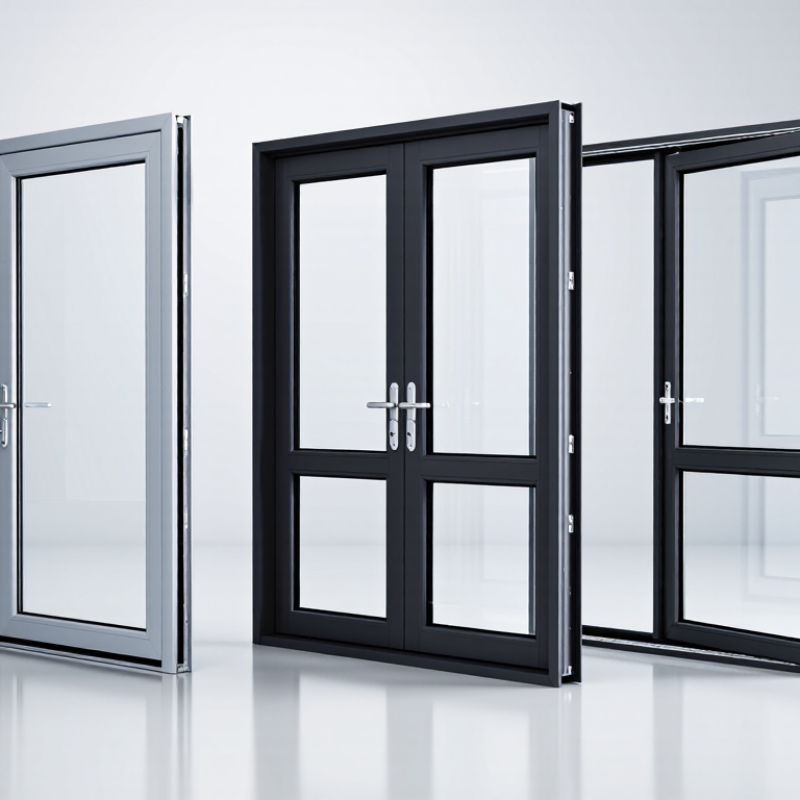
Top Aluminium Door With Window Suppliers for Global Buyers

Aluminium Doors With Windows: Types, Features, and Global Applications

Aluminium doors with windows serve apartments, offices, hotels, schools, and coastal homes. Common types include hinged, sliding, folding, lift-and-slide, and pivot systems. Sliding doors suit compact rooms, while folding systems create wider openings for balconies and restaurants. Aluminium frames offer low maintenance, corrosion resistance, and stable performance under temperature changes.

Energy performance depends on more than the frame. Thermal breaks, insulated glazing, airtight seals, and correct installation reduce heat transfer. The International Aluminium Institute reports that buildings represent about 25% of global aluminium demand, showing the material’s importance in construction. Grand View Research valued the global aluminium doors and windows market at over USD 60 billion in 2023, with continued growth expected through the decade. Market figures vary by research method. Buyers should compare definitions carefully.

Global applications require local judgment. Coastal projects need suitable surface treatments and corrosion-resistant hardware. Cold regions often require triple glazing and deeper thermal breaks. Hot climates may benefit from solar-control glass and external shading. Fire ratings, wind-load testing, acoustic performance, and accessibility also deserve written verification. Check the hinges, seals, and drainage paths. Small failures become expensive quickly. In my experience, suppliers often highlight frame strength but under-explain installation tolerances. That deserves more scrutiny, especially when doors cross borders and face different building standards.

Key Standards for Evaluating International Aluminium Door Suppliers

Global buyers should evaluate aluminium door suppliers through documented performance, not attractive catalog images. Check the alloy grade, profile thickness, thermal-break design, and hardware quality. Reliable suppliers provide test reports for air leakage, water resistance, wind pressure, and thermal performance. Standards such as EN 14351-1, ASTM E283, and ASTM E331 can support fair comparisons. However, certificates need verification from qualified laboratories.

Tips: Request a physical corner sample. Measure frame thickness, gasket contact, drainage holes, and coating consistency. Ask for batch records, inspection photographs, and clear tolerance limits. Confirm whether the quoted performance applies to the complete door system, not only the glass or profile. Small details matter.

International service is another important standard. Suppliers should explain lead times, packaging methods, replacement procedures, and installation guidance in precise English. A strong quality system should include incoming material checks, assembly inspections, and final testing before shipment. Ask for references from projects with similar climate and volume requirements. Hot coastal air, freezing winters, and heavy rain expose different weaknesses. A polished brochure can still hide slow communication or uneven production. That is worth testing early. Compare response times, revised drawings, and sample accuracy before signing a large order.

International buyers should verify that aluminium door suppliers can provide test reports and technical documentation covering air permeability, watertightness, wind resistance, thermal performance, and acoustic performance. The chart shows the number of standard classification levels used in widely applied European testing frameworks; higher classification counts indicate a more detailed rating scale, not automatically better product performance.

Manufacturing Quality, Materials, and Customization Options

Top Aluminium Door With Window Suppliers for Global Buyers

Manufacturing quality starts with controlled aluminium profiles, accurate cutting, and stable assembly. Experienced suppliers inspect frame corners, drainage paths, hinges, and locking points before packing. Look for material grades suited to the project, not simply the lowest quoted price. Marine environments need stronger surface protection. Thermal-break profiles can reduce heat transfer in demanding climates. Glass selection also matters. Low-emissivity glass, laminated glass, and double glazing serve different performance goals. Ask for test reports, production photos, and batch traceability. These details make quality easier to verify.

Tips: Request a physical corner sample before approving large quantities. Check coating thickness, glass labels, gasket fit, and screw placement. Confirm packaging protects exposed edges during long-distance transport. Small checks prevent expensive surprises.

Customization should be practical, not decorative alone. Suppliers may adjust opening sizes, colours, glass types, grille patterns, thresholds, and insect screens. Confirm drawings before production, including wall thickness and opening direction. A small measurement error can affect installation. I have seen attractive doors fail because drainage was ignored. That mistake is easy to repeat. Reliable suppliers explain limitations clearly and provide revision records. They should also confirm applicable safety, energy, and building requirements for the destination market. Some specifications may still need local review.

Comparing Supplier Pricing, Certifications, and Export Capabilities

Top Aluminium Door With Window Suppliers for Global Buyers

Pricing should begin with the complete delivered cost, not the factory quotation. The International Aluminium Institute reported global primary aluminium production above 70 million tonnes in 2023. This scale makes aluminium pricing highly sensitive to energy, billet, and freight changes. Compare quotations against alloy grade, thermal-break design, glass specification, hardware, packaging, and Incoterms. A low FOB price may become expensive after ocean freight, insurance, duties, and local installation.

Certification needs closer inspection. ISO 9001 can indicate controlled production, but it does not prove every door meets regional building requirements. Ask suppliers for current test reports covering air leakage, water penetration, wind resistance, thermal performance, and glass safety. For European shipments, request relevant conformity documentation. Other markets may require different standards. Check the issuing laboratory, test date, product configuration, and factory address. Paperwork alone is not enough.

Export capability is visible in small details. UN Comtrade data shows aluminium products move through complex global trade routes, so documentation accuracy matters. Experienced suppliers should provide commercial invoices, packing lists, certificates of origin, customs codes, and moisture-resistant packing plans. Request photos of corner protection and container loading. A damaged frame creates hidden costs. Supplier comparisons also need production lead times, replacement policies, and communication records. Price wins too often. That can be a mistake. A practical scorecard, supported by samples and third-party inspections, usually reveals the more reliable partner.

Top Aluminium Door With Window Suppliers for Global Buyers - Comparing Supplier Pricing, Certifications, and Export Capabilities

Supplier Profile Primary Supply Region Typical Product Range Indicative FOB Price Minimum Order Quantity Typical Production Lead Time Common Certifications and Test Documents Export and Logistics Capability Customization Capability Best Fit for Global Buyers
Profile A: High-Volume Factory East Asia Thermal-break aluminium doors with insulated glass, sliding systems, hinged doors, integrated windows US$120–280/m² Usually 20–50 m² per design or project batch 25–45 days after approved drawings and deposit ISO 9001 may be available; CE-related documentation, EN 14351-1 performance data, glass test reports, powder-coating records Frequent container exports; commonly supports FOB, CIF and FCA; export packing and palletized loading available High: profile colors, glazing, hardware, dimensions, drainage, screens and packaging Large residential, commercial and distributor orders seeking competitive pricing
Profile B: Specification-Oriented Manufacturer East Asia Architectural thermal-break systems, lift-and-slide doors, curtain-wall-compatible window doors US$180–420/m² Often 10–30 m², subject to system and finish selection 30–55 days, including engineering review and sampling ISO 9001; air, water and wind-load test reports; thermal transmittance data; acoustic and safety-glass documentation where specified Experienced with project documentation, container consolidation and destination-port delivery coordination Very high: shop drawings, performance specifications, hardware schedules and mock-ups Architect-led projects, hotels, offices and buyers requiring documented performance
Profile C: Mid-Range Export Supplier South Asia Standard aluminium framed doors with windows, sliding doors, casement units and balcony systems US$95–230/m² Generally 25–75 m², depending on configuration 30–60 days after technical confirmation ISO 9001 may be offered; mill certificates, coating specifications, glass certificates and basic inspection reports Suitable for mixed-container orders; commonly offers FOB and CIF; buyer-appointed inspection is usually possible Medium to high: standard profile systems with selectable colors, glass types and hardware options Importers and contractors balancing price, standardization and moderate customization
Profile D: Regional Project Fabricator Middle East Aluminium entrance doors, villa windows, sliding balcony doors and climate-focused glazing systems US$150–360/m² Commonly 10–40 m² per project or shipment 20–45 days for standard systems; longer for imported profiles or special glass Project-specific fire, safety-glazing and weather-performance documents; ISO 9001 availability varies by fabricator Strong regional delivery capability; export readiness varies; road freight and port-based shipments may be available High for project dimensions, solar-control glass, colors and local building requirements Gulf, North African and hot-climate projects requiring regional technical adaptation
Profile E: European Compliance-Focused Supplier Europe High-performance aluminium doors with windows, low-threshold systems, fire-rated and acoustic options US$280–650/m² Usually 5–20 m², with project-based ordering available 35–70 days depending on system, glazing and certification requirements CE marking where applicable; EN 14351-1 documentation; ISO 9001 or equivalent quality systems; declared thermal, acoustic and weather performance Strong intra-European logistics; export documentation and pallet standards are generally well established High, with detailed system engineering and specification support Buyers prioritizing traceability, documented compliance and advanced performance
Profile F: North American Project Supplier North America Aluminium storefront doors, commercial window-door assemblies, impact-resistant and thermally improved systems US$240–600/m² Typically 5–25 m² or one complete project package 30–75 days, depending on engineering, glazing and approval procedures Project-specific ASTM/AAMA test reports; safety-glazing records; energy-performance documentation; quality certification varies by supplier Strong domestic distribution; international export support varies and may require buyer-appointed freight forwarders High for commercial specifications, hardware, glazing and local code requirements Commercial construction buyers working to North American performance standards
Profile G: Small-Batch Custom Fabricator Eastern Europe Custom-size aluminium doors with side windows, bespoke residential systems and renovation units US$190–480/m² Often 1–10 m² or one residential order 30–65 days after final measurements and drawings Product declarations, glass safety documentation and system test reports may be available; certification scope should be confirmed per order Flexible courier, truck and pallet shipping; container-scale export capability may be limited Very high for one-off dimensions, finishes, handles and glazing combinations Architects, renovation contractors and buyers needing small quantities or unusual dimensions
Profile H: Value-Focused Standard-System Supplier Southeast Asia Standard sliding doors, aluminium windows, balcony doors and basic framed door-window combinations US$85–210/m² Usually 30–100 m², with standard colors preferred 25–50 days for repeat designs; 40–65 days for new configurations Basic material and coating documentation; ISO 9001, glass reports and product testing depend on the manufacturer Container export is commonly available; FOB and CIF quotations are typical; consolidation may be offered Moderate: standard profiles with selectable glass, color, screen and hardware options Distributors and cost-sensitive buyers purchasing standardized product lines

Pricing and certification note: Figures are indicative international market ranges for aluminium door-and-window assemblies and can change according to alloy grade, thermal-break design, glazing specification, hardware, finish, order volume, destination, exchange rates and Incoterms. Buyers should verify current quotations, accreditation validity, test standards, product declarations, packing details and export documents before placing an order.

How Global Buyers Can Select and Order the Right Supplier

Top Aluminium Door With Window Suppliers for Global Buyers

How Global Buyers Can Select and Order the Right Supplier

Selecting an aluminium door with window supplier requires more than comparing prices. Start with clear specifications, including frame depth, glass type, thermal performance, finish, hardware, and opening direction. A reliable supplier should provide technical drawings, material details, test reports, and realistic production times. Ask how quality is checked before shipment. Photos alone are not enough.

Request a sample or a small trial order when possible. Inspect corner joints, drainage holes, surface coating, seals, and glass edges carefully. These details often reveal production quality. Confirm packaging with actual photographs, especially for long-distance shipping. Discuss payment stages, delivery terms, replacement procedures, and communication channels in writing. Factory experience matters, but it does not guarantee every order will be perfect. Mistakes still happen. The buyer must review drawings before approval.

Tips: Compare at least three qualified suppliers. Check recent customer references and factory capacity. Ask whether the quoted price includes glass, hardware, packaging, and loading. Confirm applicable product standards in the destination market. Keep one approved sample or signed drawing for future comparison. Allow extra time for revisions, inspections, and customs procedures. Cheap offers can become expensive after damaged frames, missing parts, or delayed installation. A practical supplier is transparent about limits, not only confident about promises.

FAQS

What types of aluminium doors with windows are commonly available?

Common options include hinged, sliding, folding, lift-and-slide, and pivot doors. Sliding doors save space. Folding doors create wider balcony or restaurant openings.

Why are aluminium frames used in many buildings?

Aluminium frames need little maintenance and resist corrosion. They remain stable during temperature changes. Their appearance also suits apartments, offices, hotels, schools, and coastal homes.

How can aluminium doors improve energy performance?

Choose thermal breaks, insulated glazing, airtight seals, and careful installation. The frame alone does not guarantee efficiency. Small gaps can increase heat transfer.

Which door features suit different climates?

Coastal buildings need suitable surface treatments and corrosion-resistant hardware. Cold regions may need triple glazing and deeper thermal breaks. Hot climates can use solar-control glass and external shading.

What performance information should buyers request?

Request documented results for air leakage, water resistance, wind pressure, and thermal performance. Verify reports through qualified laboratories. Attractive catalog images are not enough.

How can buyers inspect a supplier’s physical quality?

Request a physical corner sample. Measure the frame thickness, gasket contact, drainage holes, and coating consistency. Ask for batch records and inspection photographs. Details matter.

Should performance claims apply to the complete door system?

Yes. Confirm that quoted results cover the complete door, including frame, glass, seals, and hardware. A strong glass result may not represent the installed door.

What installation and delivery details need written confirmation?

Confirm lead times, packaging methods, replacement procedures, installation guidance, and tolerance limits. Check hinges, seals, and drainage paths. Installation tolerances are often under-explained.

How should international buyers compare suppliers?

Compare revised drawings, sample accuracy, response times, references, and final inspection procedures. Ask about similar climate and project volumes. Fast replies help, but they do not prove consistent production.

What risks deserve extra attention before a large order?

Fire ratings, wind testing, acoustic performance, accessibility, and local building requirements need written verification. A polished brochure can hide uneven production. I would test communication early.

Conclusion

Choosing the right Aluminium Door With Window supplier is essential for global buyers seeking reliable performance, attractive design, and long-term value. These products are available in various configurations, including sliding, hinged, folding, thermal-break, and energy-efficient systems, making them suitable for homes, offices, hotels, and commercial buildings. Key evaluation factors include frame strength, glass options, weather resistance, insulation, security features, finish quality, and compliance with recognized international standards.

Buyers should also examine the supplier’s manufacturing processes, aluminium alloy quality, customization capabilities, production capacity, and quality-control procedures. A professional comparison should consider transparent pricing, certifications, packaging, lead times, minimum order quantities, warranty terms, and export experience. Before placing an order, global buyers should provide accurate project specifications, confirm technical drawings and samples, clarify installation requirements, and assess communication and after-sales support. Selecting a supplier that combines dependable production, flexible customization, documented compliance, and efficient logistics can help ensure a smooth purchasing process and consistent product performance across different markets.

Liam

Liam

Liam is a dedicated marketing professional with a profound expertise in the industry, where he excels at highlighting the unique advantages of our core products. With a keen understanding of market trends and consumer needs, Liam frequently updates our company’s professional blog, providing......