Choosing the best Aluminium Washroom Door from China requires more than comparing catalogue prices. The right choice depends on moisture resistance, profile strength, hardware quality, privacy, and long-term maintenance. A door may look elegant in a showroom, yet perform poorly beside a constantly wet floor.
Gary Katz, a respected door and hardware consultant, has said, “Doors are the most used and abused component in a building.” His observation applies strongly to washroom projects. Every day, users push, pull, lock, and clean these doors. Therefore, a dependable Aluminium Washroom Door should use suitable aluminium profiles, accurate corner joints, corrosion-resistant hinges, and a privacy lock designed for frequent operation.
Look closely at the details. A 6063 aluminium frame, durable powder coating, and sealed panel edges can improve service life. Smooth surfaces also reduce cleaning effort. However, not every Chinese supplier offers the same manufacturing control. Some factories provide excellent tolerances and inspection records. Others rely mainly on attractive photographs.
That difference matters.
This guide examines how to judge Chinese suppliers, materials, finishes, dimensions, hardware, packaging, and after-sales support. It also considers custom colours, compact washroom layouts, accessible clearances, and installation conditions. No single model is best for every project. A hotel, school, airport, and office may require different door configurations.
The honest answer can feel less convenient. The cheapest quotation is rarely the complete cost. Freight, replacement parts, installation errors, and delayed communication can change the final result. Buyers should request samples, technical drawings, test information, and clear warranty terms before placing an order. Practical evidence beats confident promises.
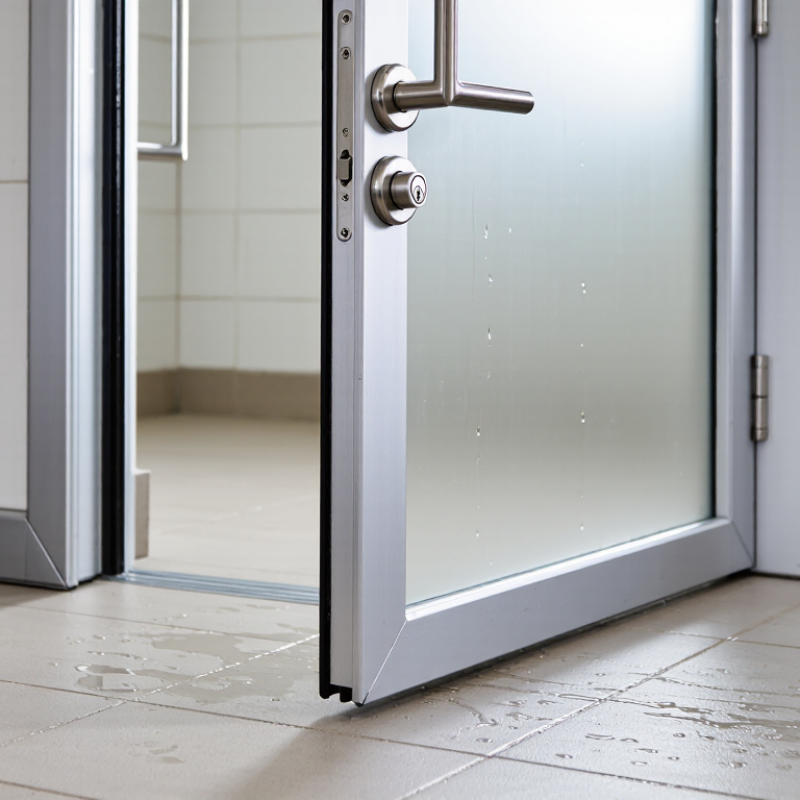
For washroom projects, 6063-T5 aluminium frames offer a practical balance of strength, weight, and machinability. The T5 temper means the extrusion is artificially aged after cooling. This supports stable door profiles and cleaner hardware installation. The USGS Mineral Commodity Summaries 2025 reports approximately 72 million metric tons of primary aluminium production worldwide in 2024. That scale supports broad material availability, but it does not guarantee good fabrication. Factory control still matters.
A 15-μm anodized finish deserves careful checking. It provides a harder surface than untreated aluminium and helps resist moisture, fingerprints, and routine cleaning. However, thickness may vary around corners, cut edges, and drilled holes. Ask for coating-thickness records, alloy certificates, and sample inspection photographs. ISO 7599 provides guidance on anodic oxidation on aluminium, while QUALANOD specifications commonly distinguish coating classes by thickness. The exact class should match the washroom’s humidity and cleaning conditions. In real projects, poor drainage can damage a good finish.
The best aluminium washroom door depends on moisture, traffic, and cleaning frequency. In practical projects, 1.0 mm aluminium panels keep doors light and economical. They suit private offices and moderate-use facilities. However, thin panels can dent around hinges or latch areas. A 1.5–2.0 mm panel feels stronger and resists twisting better. It also adds weight, so the frame and hinges need proper reinforcement. This detail is often overlooked.
HPL offers a hard, decorative surface over a stable core. It handles daily cleaning well, but damaged edges may expose the inner board. PVC panels tolerate humidity and are easy to wipe. They remain useful in wet rooms, although some low-grade PVC can scratch or lose colour.
Compact laminate is dense, waterproof, and highly impact-resistant. It performs well in schools, sports centres, and busy public washrooms. The trade-off is clear: it costs more and demands stronger hardware.
Ask the manufacturer for panel thickness, core density, edge treatment, hinge load testing, and sample sections. Do not judge quality from a polished showroom photo.
I once trusted a thick-looking panel that flexed near the lock. The surface was attractive, but the internal support was weak. That mistake changed my inspection method. Check corners, screw holding, door alignment, and repeated opening tests. Material choice matters, but careful fabrication often decides service life.
For an aluminium washroom door, three standards deserve careful attention.
ISO 7599 covers anodized aluminium coatings, including appearance, coating thickness, and surface quality. A practical factory check should include coating measurement at several points, especially near corners and handle cut-outs. These areas often reveal uneven finishing first.
ASTM B221 covers extruded aluminium profiles, including mechanical properties, dimensions, and tolerances. It does not certify the complete door. That distinction matters.
EN 12207 evaluates air permeability for windows and doors. Its Classes 1 to 4 reflect increasing resistance under test pressure. A well-fitted washroom door should show controlled gaps, stable seals, and consistent closing force. A high class sounds useful, but it cannot replace on-site installation checks. Real walls are rarely perfect.
The International Energy Agency reported that buildings consumed about 30% of global final energy in 2022. This supports tighter envelope design, even for small commercial interiors. For Chinese sourcing, request the alloy grade, extrusion records, anodizing inspection data, and EN 12207 test conditions. Check whether the report covers the finished door assembly, not only a profile sample. I would also inspect three random units from one batch. Laboratory results can be reliable, yet production variation remains a practical weakness. No certificate removes that risk.
A reliable aluminium washroom door begins with measurable manufacturing control. Ask the factory to verify the door leaf, frame, and opening dimensions against a written ±1 mm tolerance. A good inspection also checks diagonal measurements, corner alignment, and gasket compression. These details affect closing, privacy, and water resistance. Small errors become obvious during installation. Not enough.
Inspectors should measure samples from each production batch, not only one finished door. Request dated inspection records, photographs, and the actual measuring method. A ±1 mm claim can sound impressive, but it may exclude hinges, seals, or installation gaps. That limitation deserves attention. Experienced buyers compare drawings with physical samples before approving mass production.
Hardware strength matters in busy washrooms. Hinges, locks, handles, and fixing screws should withstand repeated opening cycles without loosening. Ask for cycle-test results and confirm the hardware material, coating, and adjustment range. Test the door under slight misalignment, because real sites are rarely perfect. Cheap hinges often reveal weakness early.
Drainage needs equal care. The threshold should guide water away without trapping dirt. Check floor clearance, slope direction, and sealed frame joints. Pouring water across a sample can reveal backflow or hidden pooling. I would also inspect the lower aluminium edge for sharp corners and incomplete sealing. That detail prevents avoidable maintenance problems.
For an aluminium washroom door from China, supplier verification matters more than a polished catalogue.
Ask for a current ISO 9001 certificate, then check its scope, address, and expiry date. The ISO Survey 2023 recorded about 1.26 million ISO 9001 certificates worldwide, but certification alone does not prove product quality. Request factory photos, coating specifications, and recent production records. A reliable supplier should explain aluminium alloy, wall thickness, hardware grade, and moisture resistance clearly.
MOQ can change your total cost.
A low MOQ may carry higher prices, while a large MOQ can create storage pressure. Request a written quotation for one sample, one trial order, and full-container quantities. Warranty terms should name the covered parts, claim period, response time, and excluded damage. Two years sounds useful, but vague wording is weak protection. Test reports should identify the exact door model, laboratory, test date, and standards used. Useful evidence may include corrosion, impact, water resistance, and hardware-cycle testing.
Tips: Compare documents, not promises. Ask for a sample before bulk production. Measure frame gaps with a feeler gauge. Check whether hinges remain smooth after repeated opening. ASTM or EN references can help, but only when the tested construction matches your project. One report may cover a different panel or coating. That is an easy mistake. I would also keep approved drawings, colour codes, and packing photos in the purchase file. Small details prevent expensive arguments later.
A 1.0 mm panel is light and economical for private offices. It suits moderate traffic. However, thin panels may dent near hinges and locks.
Choose a thicker panel for busy washrooms and frequent daily use. It feels more stable during repeated opening. The extra weight requires reinforced frames and hinges. This detail is easy to miss.
HPL provides a hard, decorative surface over a stable core. It handles regular cleaning well. Damaged edges may expose the inner board. Inspect edge sealing carefully.
PVC panels tolerate humidity and wipe clean easily. They can work well in wet rooms. Lower-grade PVC may scratch or fade. Ask for surface samples under strong light.
Compact laminate suits schools, sports centres, and busy public washrooms. It is dense, waterproof, and impact-resistant. The material costs more. It also needs stronger hinges and frames.
Ask for panel thickness, core density, edge treatment, and hinge-load testing. Inspect corners, screw holding, latch areas, and door alignment. Open and close sample doors repeatedly. Photos can mislead.
Request alloy details, extrusion records, coating measurements, and finished-door test conditions. Check coating thickness near corners and handle cut-outs. Confirm whether testing covers the complete door assembly. A profile-only report is not enough.
No certificate removes production or installation risks. Inspect several random doors from the same batch. Check gaps, seals, closing force, and wall alignment. I once trusted a thick-looking panel that flexed near the lock. That changed my inspection method.
Choosing the best Aluminium Washroom Door from China requires careful evaluation of its materials, construction, and supplier reliability. A quality door typically uses 6063-T5 aluminium frames with approximately 15-μm anodizing for strength, corrosion resistance, and a consistent finish. Core options may include 1.0–2.0 mm aluminium panels, HPL, PVC, or compact laminate, each offering different levels of durability, moisture resistance, appearance, and cost. The most suitable material depends on the washroom environment and expected usage intensity.
Buyers should also review performance evidence based on standards such as ISO 7599, ASTM B221, and EN 12207, along with practical factory quality checks. Important details include ±1 mm dimensional tolerance, durable hardware, effective drainage, and secure installation design. Before placing an order, compare suppliers by checking relevant certifications, minimum order quantities, warranty terms, production capacity, and complete test reports. A dependable supplier should communicate clearly, maintain consistent quality control, and provide documentation that supports long-term performance.

Cresta Window Tech