How to Choose Aluminum Door Suppliers in 2026?

Time:2026-09-30 Author:Aria
0%

Choosing an Aluminum Door supplier in 2026 requires more than comparing online prices. The right partner should combine proven manufacturing experience, stable materials, and dependable project support. A polished website is not enough. Ask where the doors are made, which systems are used, and how quality is checked before shipment.

Look closely at the details. A reliable supplier should explain alloy grades, thermal-break designs, glass options, powder-coating standards, and hardware performance. Factory photos can help, but independent inspection records and recent project references provide stronger evidence. Request samples before placing a large order. Test the frame finish, corner joints, seals, locking movement, and packaging. Small defects often become expensive installation problems.

Promises are easy.

During supplier evaluation, review production capacity, lead times, warranty terms, replacement procedures, and communication practices. Experienced buyers should also confirm whether the supplier can meet local building requirements and provide accurate technical documents. Certifications matter, but their scope and validity should be verified rather than assumed. A responsive sales team is useful, yet engineering support may matter more when sizes, wind loads, or unusual finishes change.

No checklist is flawless. I have learned that a low quotation can hide weak packaging, unclear tolerances, or delayed spare parts. A slightly higher price may represent better testing and fewer site interruptions. Compare total project value, not only the initial invoice. By examining evidence, asking precise questions, and documenting every agreement, buyers can choose an Aluminum Door supplier with greater confidence and fewer costly surprises in 2026.
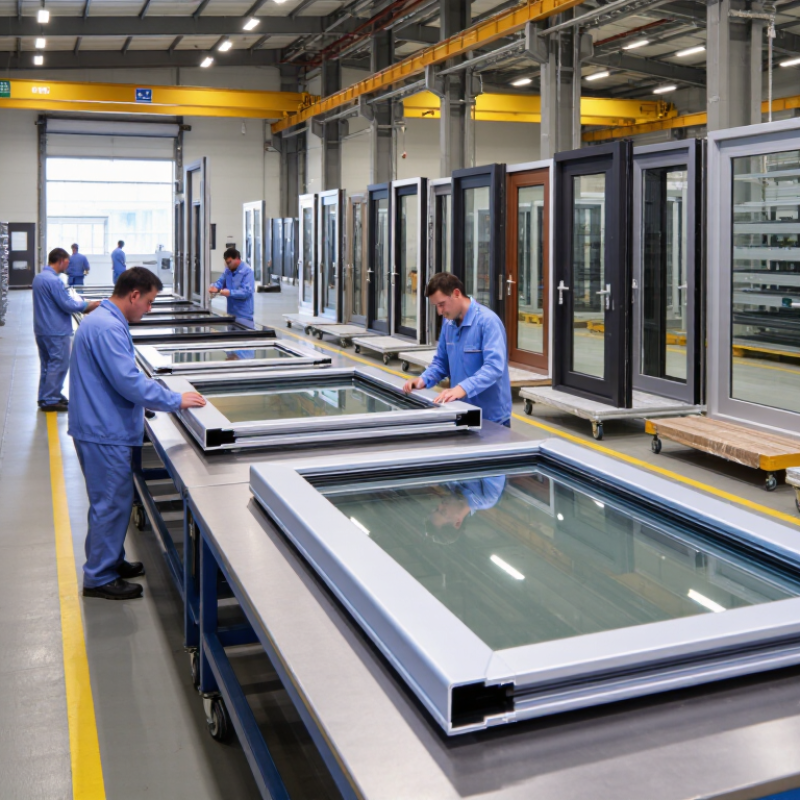
How to Choose Aluminum Door Suppliers in 2026?

Define Your Aluminum Door Requirements and Project Criteria

How to Choose Aluminum Door Suppliers in 2026?

Define Your Aluminum Door Requirements and Project Criteria

A reliable supplier search starts with a clear project brief. Specify door quantities, opening sizes, installation locations, and expected traffic levels. Note whether the doors serve apartments, offices, retail spaces, or coastal buildings. Each setting creates different performance demands. Record preferred colors, glazing types, thermal targets, security needs, and accessibility details. A simple schedule with measurements can prevent expensive misunderstandings later.

In practice, aluminum systems should be checked for frame depth, wall thickness, hardware quality, drainage, and weather seals. Ask suppliers for test reports, material specifications, warranties, and installation guidance. Confirm that proposed products meet applicable building, energy, fire, and accessibility requirements in your project location. Do not trust attractive samples alone. Request full-size details or site references when possible. A perfect specification is unlikely. Leave room for revisions after reviewing actual drawings, budget limits, and site conditions.

Tips

Create a comparison sheet before requesting quotations. Include delivery dates, packaging, tolerances, replacement procedures, and technical support. Ask who handles measurement errors or damaged components. Clarify these points in writing. Also, review the supplier’s communication speed and document accuracy. Small delays can affect glazing, flooring, and handover schedules. I would not select the lowest price automatically; an incomplete quote may become costly. Recheck every assumption, especially coastal exposure, drainage, and unusual opening sizes.

Verify Supplier Credentials, Experience, and Manufacturing Capacity

Choosing an aluminum door supplier in 2026 requires more than comparing catalog prices. Verify credentials before discussing large orders. Request business registration, quality certificates, export records, and recent audit reports. Check whether certificates match the factory’s legal entity and production address. A certificate with a different name needs clarification. Simple, but often missed.

Experience becomes visible in details. Ask for project references involving similar door sizes, finishes, climates, and installation conditions. Speak with recent customers, not only selected testimonials. Review drawings, sample corners, drainage paths, gasket placement, and hardware alignment. An experienced technical team should explain tolerances without hiding behind vague promises. During a factory visit, watch how profiles are cut, corners are joined, surfaces are protected, and defects are recorded. Photos help, but live observation is stronger evidence.

Manufacturing capacity must match your schedule, not merely impress you. Confirm monthly output for comparable products, available extrusion and finishing capacity, testing equipment, and backup plans for material delays. Request a realistic production timeline with inspection points. Ask who owns quality decisions when orders become urgent.

I once judged a large workshop capable because its floor was full of machinery. Later, I learned that busy equipment does not guarantee consistent assembly. That assumption was careless. Capacity means repeatable quality, trained staff, maintenance records, and controlled packaging. Leave room for questions. Reliable suppliers welcome verification because evidence protects both sides.

Compare Aluminum Door Materials, Designs, and Performance Standards

How to Choose Aluminum Door Suppliers in 2026?

Choosing an aluminum door supplier starts with the material, not the showroom finish. Ask which alloy is used for the frame and how its thickness is controlled. Common architectural alloys, such as 6063, offer good formability and corrosion resistance. However, alloy alone does not guarantee a durable door. Thermal-break systems reduce heat transfer through the frame. Check the polyamide section, connection quality, and insulation continuity.

Design should match the building’s daily demands. A slim sliding door creates wide views, but its rollers need accurate installation and regular cleaning. Hinged doors usually provide stronger compression seals. Large glass panels require suitable hardware and reinforced profiles. Request full-size samples, not small corners. Small samples can hide poor drainage and weak joints. I once trusted a polished sample too quickly. The installed door revealed uneven gaps.

Performance documents deserve careful review. Ask for independent test reports covering air permeability, water tightness, wind resistance, acoustic control, and thermal transmittance. European projects may reference EN 12207, EN 12208, and EN 12210. Other regions may use different standards. Confirm that the tested configuration matches the proposed size, glass, locks, and installation method. A certificate for one model may not cover another. Also inspect coating specifications, warranty conditions, replacement parts, and installer training. Reliable suppliers explain limitations clearly instead of promising perfect performance.

How to Choose Aluminum Door Suppliers in 2026?

Comparing aluminum door materials, designs, and thermal performance

The chart shows representative whole-door U-value midpoints for common aluminum door configurations. Lower U-values indicate better thermal insulation. Actual results depend on frame depth, glazing, thermal-break design, door size, hardware, installation quality, and certified test conditions. Ask suppliers for verified results under EN 14351-1, EN 12207, EN 12208, EN 12210, or equivalent local standards.

Evaluate Pricing, Warranties, Lead Times, and Customer Support

In 2026, comparing aluminum door suppliers means comparing delivered value, not catalogue prices. Ask for itemized pricing covering profiles, glass, hardware, finishes, packaging, freight, taxes, installation guidance, and replacement parts. A 2024 report from the Associated General Contractors of America found that 63% of contractors experienced project delays from material or equipment shortages. That figure makes lead-time evidence essential. Request a production schedule, dispatch date, shipping route, and written remedies for delays. “Ships in four weeks” is not enough.

Check whether the quotation uses current aluminum and energy assumptions. The U.S. Bureau of Labor Statistics Producer Price Index tracks cost movements for aluminum mill shapes. Ask suppliers how frequently they reprice. A lower offer may hide thinner sections, weak finish protection, or incomplete testing. Require performance documents, drawings, sample corners, and stated tolerances. For warranties, separate finish, hardware, glass, and installation coverage. Confirm duration, exclusions, labor responsibility, claim deadlines, and freight payments. A long warranty is weak without a reachable claims process.

Test customer support before purchasing. Send each supplier the same technical question and record response time, accuracy, and ownership. Ask for escalation contacts and references from similar projects, including coastal sites or heavy-traffic entrances. The 2024 FMI North American Engineering and Construction Outlook identifies labor and supply-chain pressure as continuing risks. Responsive coordination matters. One uncomfortable lesson: a polished sample does not prove reliable service. Score suppliers on landed cost, documented lead time, warranty clarity, and support behavior. Keep every promise in the contract.

How to Choose Aluminum Door Suppliers in 2026? — Evaluate Pricing, Warranties, Lead Times, and Customer Support
Supplier Evaluation Dimension Competitive Benchmark for 2026 Acceptable Minimum Evidence to Request Scoring Weight Warning Signs
Aluminum door pricing USD 250–650 per m² for standard systems Written quotation with itemized materials, hardware, glazing, packaging, and delivery Formal quotation, project drawings, specification sheet, and validity period of at least 30 days 25% Unusually low price, unclear exclusions, or frequent price changes after approval
Thermal performance Thermally broken frames; whole-door U-value commonly targeted at approximately 1.6–2.5 W/m²K Documented U-value or equivalent thermal-performance data for the proposed configuration Test report, calculation, system section drawing, and glazing specification 15% Performance figures apply only to the glass and not to the complete door assembly
Air, water, and wind resistance Tested performance appropriate for the project’s climate and building height Third-party or accredited laboratory test results for the same or comparable system Test standard, test date, sample configuration, and classification or pressure results 10% Generic certificates with no model number, test scope, or configuration details
Product warranty 5–10 years for aluminum frame finish; 2–5 years for hardware and moving components Clearly written coverage, exclusions, claim process, and repair or replacement terms Warranty document, finish warranty, hardware warranty, and spare-parts policy 15% Warranty begins before delivery, excludes normal components, or requires costly return shipping
Standard production lead time 25–45 calendar days after drawing approval and deposit for standard configurations Confirmed production schedule with milestones and a defined delivery window Project schedule, order confirmation, approval procedure, and delay-notification policy 15% No schedule commitment or lead time stated only as “as soon as possible”
Custom or large-volume orders 45–75 calendar days, depending on tooling, finish, glazing, and quantity Separate timeline for tooling, samples, production, inspection, and shipment Milestone plan, capacity confirmation, sample approval record, and contingency plan 5% Supplier cannot explain capacity limits or material allocation for peak periods
Pre-sales communication Response within 1 business day for technical or quotation inquiries Named project contact and documented response process Communication log, technical questionnaire, and sample response to a detailed RFQ 5% Slow replies, incomplete answers, or refusal to review project drawings
After-sales support Initial response within 1 business day; corrective-action plan within 3–5 business days Written process for defects, replacement parts, remote troubleshooting, and site support Service-level agreement, claim form, spare-parts list, and escalation contacts 5% No local or regional service contact and no defined replacement-parts availability
Quality consistency Pre-shipment inspection covering dimensions, finish, hardware operation, packing, and labeling Inspection checklist and photographic or third-party inspection records Factory quality plan, inspection report template, defect tolerance, and batch traceability 5% Supplier will not permit inspection or provide batch and component traceability
Commercial transparency Payment milestones linked to approval, production, inspection, and shipment Contract states currency, taxes, Incoterms, delivery responsibility, and change-order rules Sales contract, pro forma invoice, Incoterms confirmation, and change-control procedure 5% Full payment requested before production or unclear responsibility for transit damage
Recommended decision rule: shortlist suppliers that meet every acceptable minimum, then compare the weighted score. Confirm all prices, performance values, warranty terms, and delivery dates in the final contract because aluminum, glazing, freight, exchange rates, and project specifications can materially change the quotation.

Assess Samples, Quality Controls, and Long-Term Supplier Reliability

How to Choose Aluminum Door Suppliers in 2026?

A reliable supplier should provide physical samples, not only polished catalog images. Check frame corners, hinge alignment, drainage holes, seals, and surface consistency. Open and close each sample repeatedly. Listen for scraping or movement. A beautiful finish means little if the door twists after installation. Ask for coating specifications, material grades, and recent test reports. Verify that the documents match the actual sample. This step is often rushed, and that creates expensive surprises later.

Quality control must be visible and repeatable. Ask how incoming aluminum, glass, hardware, and finishes are inspected. Request production records, measurement reports, and photographs from different batches. An experienced supplier should explain tolerance limits clearly. Visit the factory if possible, or arrange a live video inspection. Do not rely on one successful sample. A practical mistake is judging quality from a single unit. Manufacturing can vary. Also examine packaging, corner protection, labeling, and loading methods. Damaged doors often reveal weak process control.

Tips: Ask for a small trial order. Record every defect. Test communication during this stage. Measure response times, revision accuracy, and replacement handling. Check whether the supplier can maintain quality during busy seasons. Request references from comparable projects, but verify them independently. No checklist is perfect. Your notes should still expose avoidable risk.

FAQS

What information should I prepare before contacting aluminum door suppliers?

Prepare quantities, opening sizes, locations, traffic levels, colors, glazing, thermal targets, security, and accessibility needs.

How can I compare supplier quotations fairly?

Use a comparison sheet covering price, delivery, packaging, tolerances, replacements, technical support, and installation guidance.

Which technical details should I verify for aluminum doors?

Review frame depth, wall thickness, hardware quality, drainage, weather seals, and material specifications.

What should I inspect on a physical door sample?

Examine frame corners, hinge alignment, drainage holes, seals, surface consistency, and coating quality.

How can I assess a supplier’s quality control?

Ask how aluminum, glass, hardware, and finishes are inspected upon arrival.

Should I visit the factory before placing an order?

Visit if practical, or arrange a live video inspection of production and packaging.

Is a small trial order useful?

Yes. A trial order can reveal defects, communication delays, revision errors, and replacement problems.

How should I judge long-term supplier reliability?

Request references from similar projects and verify them independently.

Conclusion

Choosing the right Aluminum Door supplier in 2026 requires a structured evaluation based on your project’s practical needs and long-term goals. Begin by defining the required door types, dimensions, finishes, thermal performance, security features, installation conditions, and compliance standards. Then verify each supplier’s business credentials, industry experience, production capacity, technical expertise, and ability to manage orders of your size and complexity.

Next, compare material grades, design options, energy efficiency, durability, weather resistance, and applicable performance standards. Request clear quotations that explain product costs, delivery schedules, warranty coverage, installation support, and after-sales service. Before making a final decision, review physical samples, inspect quality-control procedures, and confirm how the supplier handles inspections, replacements, and technical issues. A dependable partner should provide consistent product quality, realistic lead times, transparent communication, and reliable support throughout the project. By assessing both immediate value and long-term cooperation potential, buyers can select an Aluminum Door supplier that offers suitable performance, predictable delivery, and professional service.

Aria

Aria

Aria is a dedicated marketing professional with a deep passion for innovative strategies and a keen understanding of our company's product offerings. With a wealth of experience in the industry, Aria excels at crafting engaging content that highlights the unique features and benefits of our......