Choosing the right Aluminum Window for global sourcing is not simply a price comparison. It is a performance decision involving climate, building design, logistics, and long-term maintenance. A window that performs well in Toronto may behave differently in Dubai or Singapore. Weather exposure matters.
The evaluation should begin with measurable details. Check the U-factor, solar heat gain coefficient, air leakage, water resistance, and structural performance. Confirm the frame alloy, thermal-break design, glazing specification, hardware quality, and surface finish. A narrow thermal break may look acceptable in a sample room, yet create condensation problems in colder regions. Small details matter. Very much.
Dr. Stephen Selkowitz, a respected building-envelope expert and former Lawrence Berkeley National Laboratory researcher, said, “Windows are the most dynamic element in the building envelope.” His observation explains why global buyers must assess the complete system, not only the aluminum frame. Review test reports, factory quality controls, packaging methods, lead times, and replacement-part availability. Ask whether the supplier can provide consistent production across repeated orders. One attractive sample proves little.
A reliable sourcing process also compares regional standards and installation conditions. Confirm whether the product suits local wind loads, energy requirements, and expected exposure to salt, dust, rain, or intense sunlight. Inspect corner joints, drainage paths, gaskets, and coating thickness. Request photographs from production, not only polished catalog images.
Even experienced buyers get this wrong. Lowest cost can become higher cost after damage, delays, or poor installation. A careful decision may feel slower, but it reduces unpleasant surprises. The right Aluminum Window balances tested performance, supplier accountability, practical installation, and realistic project budgets.
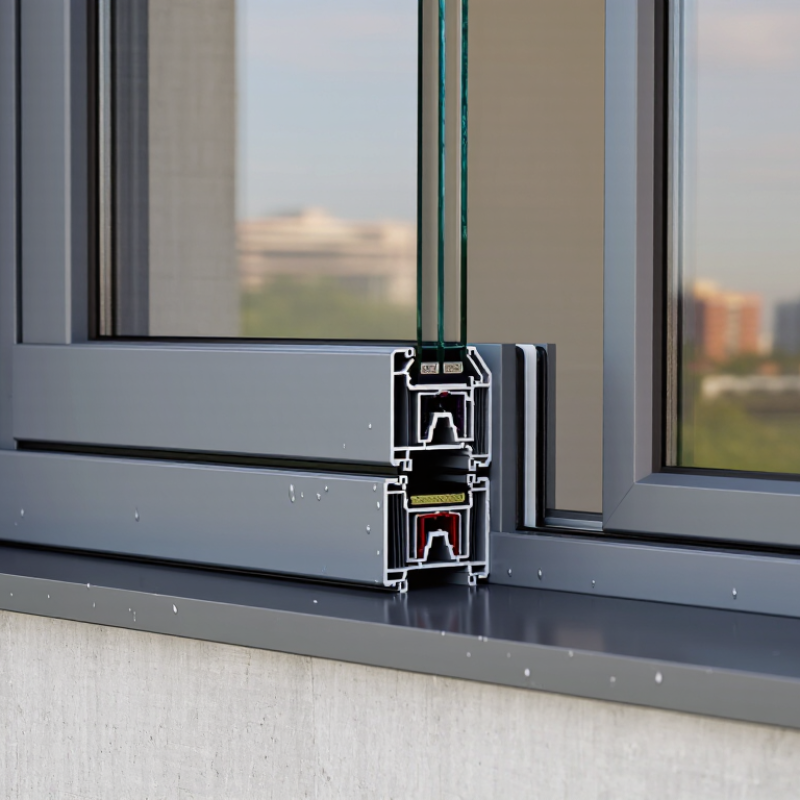
When choosing an aluminum window for global sourcing, define performance before comparing prices. Start with the building’s climate, height, orientation, and room use. A coastal apartment may need stronger corrosion protection than an inland warehouse. Write the requirements in measurable terms. Specify U-value, solar heat gain, air leakage, water resistance, wind load, and acoustic targets. Do not rely on phrases like “high quality.” Map these requirements against the destination market’s building codes and energy rules.
For each opening, record width, height, glass thickness, frame depth, and installation method. Large south-facing windows may require low solar gain glass and external shading.
Bedrooms near airports need acoustic ratings, not just thicker aluminum frames. Ask suppliers for tested performance reports, technical drawings, material grades, finish specifications, and sampling records.
Check whether tests match the complete window assembly. A strong glass result cannot hide a weak gasket or poor corner joint.
An independent inspection can reveal details that documents miss.
Global projects also depend on predictable production. Confirm dimensional tolerances, inspection points, packaging protection, replacement procedures, and delivery terms. Request a physical sample before approving mass production.
Open and close it repeatedly. Inspect drainage holes, locking pressure, seal continuity, and frame alignment.
Some specifications look precise but remain difficult to verify on site. That weakness deserves discussion before ordering.
Allow room for revision; early assumptions are often wrong.
When sourcing aluminum windows globally, compare the whole system, not appearance alone. A slim casement frame can suit modern villas, while a sliding panel saves interior space. Tilt-and-turn units offer ventilation and controlled cleaning access, but their hardware needs accurate installation. Awning windows push outward and can shed light rain, although wind exposure may limit their use.
Profile selection changes comfort and durability. Standard aluminum profiles are economical, yet they can transfer outdoor heat quickly. Thermally broken profiles use an insulating barrier between interior and exterior aluminum. Ask for section drawings, wall thickness, drainage paths, and documented thermal data. In coastal projects, I also check coating performance and fastener compatibility. A beautiful finish can fail early if water sits inside the frame.
Opening systems deserve practical testing. Slide each sash; it should move evenly without scraping. Test locks, seals, restrictors, and emergency release requirements before approving samples. For large openings, compare panel weight, roller capacity, and deflection under wind pressure. Specifications are not always complete. I have seen suppliers list glass performance while omitting the frame’s drainage design. That gap can distort cost comparisons and create installation disputes. Request a full window schedule with dimensions, glass build-up, hardware, finish, tolerances, and inspection criteria.
Thermal efficiency should guide aluminum window selection, not just frame appearance. Ask suppliers for whole-window U-values, rather than frame-only figures. Lower U-values usually indicate better insulation, but regional calculation methods can differ. A thermal break reduces heat transfer through the aluminum frame. Its design, width, and continuity matter. Inspect technical drawings, not only sales descriptions.
Glazing deserves equal attention. Double glazing may suit moderate climates, while triple glazing can improve comfort in colder regions. Low-emissivity coatings help control radiant heat and can reduce cooling demand. Solar heat gain coefficients are important in hot, sunny locations. Gas-filled cavities and warm-edge spacers may improve performance, but poor sealing can cancel those benefits. Request test results for air leakage, water penetration, and wind resistance. Confirm the testing standard and laboratory details.
Weather resistance becomes practical during installation. A well-designed window can still fail if drainage paths are blocked or flashing is incomplete. Check corner joints, gaskets, pressure-equalized chambers, and coating durability. I have seen attractive samples perform poorly after careless site fitting. That experience changed how I evaluate suppliers. I now request production samples, installation guidance, and batch inspection records. Specifications can be imperfect. Local exposure, workmanship, and maintenance still deserve honest review before approving a global order.
Choosing an aluminum window for global sourcing starts with compliance, not appearance. Ask for the target market’s required standards before requesting prices. European projects may require EN 14351-1 performance data and CE marking under the Construction Products Regulation. U.S. buyers often review air leakage, water penetration, and structural testing under ASTM E283, E331, and E330. These tests should match the complete window assembly, including glass, gaskets, hardware, and frame.
Check the factory’s quality system, test laboratory, and certificate scope. The ISO Survey 2022 recorded more than 1.2 million ISO 9001 certificates worldwide, but certification alone does not guarantee consistent windows. A certificate is not proof of every shipment. Request recent test reports, calibration records, material certificates, and sample inspection photos. Confirm whether reports identify the exact profile, coating, glass package, and production site. Details matter.
Thermal performance also deserves careful review. The 2023 Global Status Report for Buildings and Construction reported that buildings used about 34% of global energy and produced 37% of energy- and process-related emissions in 2022. Therefore, ask for U-values, solar heat gain data, condensation analysis, and verified calculation methods. Local climate changes the right specification. A high-performance window for a cold region may be unsuitable in a humid, high-sun location. I have seen sourcing teams compare only price and U-value. That approach is incomplete. Recheck labeling, customs documents, coatings, and compliance responsibilities before approving mass production.
Check standards, certifications, and global compliance before selecting a supplier. Air permeability is one important performance indicator: under EN 12207, lower leakage values indicate better resistance to uncontrolled air flow.
Procurement note: Use this classification together with structural strength, watertightness, thermal performance, safety glass requirements, and local certification rules. Depending on the target market, verify applicable evidence such as EN 14351-1, relevant North American window performance standards, or AS 2047 for Australia and New Zealand.
Choosing aluminum windows for global sourcing starts with a supplier, not a catalog. Ask for the alloy grade, profile wall thickness, coating process, hardware specifications, and current test reports. Request production samples before approving a large order. Measure frame squareness, drainage holes, gasket fit, and surface consistency. I prefer a factory audit or independent inspection because photos rarely reveal weak process controls. Ask how suppliers handle rejected profiles and replacement parts. That detail matters. Confirm production capacity during peak seasons. A low quote means little if delivery dates keep moving.
Compare total landed cost, not unit price alone. Include tooling, sampling, inspection, inland transport, duties, insurance, port fees, and storage charges. Use identical window specifications for every quotation. Otherwise, suppliers may price different glass, coatings, or hardware. Check payment terms and currency exposure. A spreadsheet helps, but it can still lie. I once underestimated oversized-frame freight because the calculation used product weight only. Measure packed volume and container utilization. Leave room for damaged-unit replacement.
Packaging must protect corners, glass, coatings, and drainage components during handling. Use corner guards, foam separators, moisture-resistant cartons, and clear package labels. Secure windows vertically when possible, with supports that prevent shifting inside the container. For long ocean routes, request corrosion-resistant protection and loading photos. If timber packaging is used, confirm destination documentation requirements before shipment. Test one packed unit by moving it through a warehouse door, pallet jack, and loading area. That practical check often exposes assumptions that paperwork misses.
| Evaluation Area | Key Dimension | Practical Benchmark or Requirement | Recommended Target | Why It Matters for Global Sourcing |
|---|---|---|---|---|
| Supplier Assessment | Years of relevant export experience | At least 3 years supplying aluminum windows to overseas markets | 3–10+ years with verifiable project references | Indicates familiarity with export documentation, international specifications, and after-sales processes. |
| Quality management system | Documented incoming-material, in-process, and final-inspection procedures | Inspection records available for every production batch | Reduces dimensional errors, surface defects, and inconsistent hardware installation. | |
| Aluminum alloy and temper | Common window profiles use 6000-series aluminum; alloy and temper should be stated in the quotation | Material certificate and profile wall-thickness data supplied | Confirms strength, corrosion resistance, and compliance with the project specification. | |
| Testing and compliance documents | Air infiltration, water penetration, structural load, thermal, and acoustic test reports where required | Reports issued by an accredited or recognized testing laboratory | Helps confirm suitability for the destination country and avoids retesting delays. | |
| Production capacity and lead time | Typical custom production lead time is approximately 25–45 calendar days after approved drawings and deposit | Capacity confirmed against the required monthly quantity | Prevents missed installation schedules and helps determine whether split shipments are necessary. | |
| Product Selection | Window configuration | Sliding, casement, tilt-and-turn, fixed, or folding designs selected according to ventilation and opening requirements | Approve shop drawings before production | Configuration affects hardware, profile weight, glass area, air tightness, and total cost. |
| Glazing specification | Single, double, or triple glazing; common insulated glass units use 12–20 mm air or inert-gas cavities | Glass thickness, spacer type, coating, and safety treatment listed separately | Glass typically has a major effect on thermal performance, weight, breakage risk, and freight cost. | |
| Thermal performance | U-value depends on frame, glass, spacer, size, and installation; compare complete-window values rather than glass-only values | Request tested or calculated whole-window U-value and solar heat-gain data | Prevents misleading comparisons based only on the glazing center. | |
| Finish and corrosion protection | Powder coating or anodizing selected for climate, exposure, and appearance requirements | Specify coating standard, color tolerance, surface preparation, and warranty terms | Coastal, humid, industrial, and high-UV environments require more careful finish selection. | |
| Hardware and seals | Hardware type, locking points, rollers, hinges, handles, and gasket material must be stated | Spare hardware allowance of approximately 1–2% for large projects | Replacement compatibility is important when local service support is limited. | |
| Cost Analysis | Product price basis | Quote should identify whether pricing is per square meter, per unit, or by complete project | Use one standardized bill of quantities for all suppliers | A consistent pricing basis makes supplier comparison more accurate. |
| Typical cost structure | Main cost drivers are aluminum, glass, hardware, labor, packaging, inland transport, and export handling | Request a line-item quotation instead of one combined price | Makes substitutions, price changes, and value engineering easier to control. | |
| Minimum order quantity | Custom colors, profiles, and tooling may require minimum quantities or setup charges | Confirm tooling, color, sample, and small-order fees in writing | Prevents unexpected charges when ordering prototypes or mixed sizes. | |
| Payment terms | Common arrangements include a deposit before production and balance after inspection or before shipment | Tie final payment to approved inspection and complete shipping documents | Reduces financial exposure and strengthens quality-control leverage. | |
| Total landed cost | Product price plus packaging, inland freight, ocean or air freight, insurance, duties, taxes, broker fees, and local delivery | Compare suppliers using the same Incoterm and destination | The lowest factory price is not always the lowest delivered cost. | |
| Packaging Requirements | Primary protection | Protective film, corner guards, foam, separators, and moisture-resistant wrapping used according to product type | No direct glass-to-glass or metal-to-metal contact | Reduces scratches, edge damage, corrosion, and movement during handling. |
| Crate or pallet design | Use reinforced wooden crates, A-frame racks, or export pallets sized to the window dimensions | Packaging must support forklift access and container loading | Proper load distribution minimizes crushing and simplifies unloading at the destination. | |
| Fumigation and wood compliance | Solid-wood packaging used in international shipments may need treatment and marking under destination rules | Use compliant treated wood or approved non-wood packaging | Non-compliant wood can cause customs delays, re-export, or disposal costs. | |
| Package identification | Each package should show project reference, item number, dimensions, quantity, gross weight, and handling marks | Match labels with the packing list and approved drawings | Clear identification reduces receiving errors and installation delays. | |
| Shipping Requirements | Transport mode | Sea freight is generally preferred for commercial quantities; air freight is normally reserved for samples or urgent replacement parts | Select mode based on volume, urgency, and breakage risk | Windows are bulky, so dimensional volume often affects freight more than product weight. |
| Container utilization | Plan loading by package dimensions, rack orientation, glass protection, and maximum safe stacking height | Approve a container-loading plan before dispatch | Efficient loading lowers freight cost and prevents pressure damage. | |
| Incoterm selection | Use a clearly defined Incoterm with named place or port, such as EXW, FCA, FOB, CIF, or DAP | Confirm responsibility for export clearance, insurance, freight, duties, and delivery | Prevents disputes over charges and transfer of risk. | |
| Shipping documents | Commercial invoice, packing list, transport document, certificate of origin where applicable, and product documents | Document details must match quantities, values, and package marks | Accurate paperwork supports customs clearance and correct duty assessment. | |
| Cargo insurance and claims | Insure the shipment according to cargo value, transport risk, and agreed responsibility | Photograph loading, packaging condition, seals, and visible damage | Evidence is essential for handling breakage, shortage, or water-damage claims. | |
| Procurement note: All cost, lead-time, freight, duty, and compliance figures should be reconfirmed with the supplier, freight forwarder, customs broker, and destination authority before placing an order. Final specifications must be based on approved drawings and destination-market building requirements. | ||||
Compare the complete system, not appearance alone. Review profiles, glass, hardware, seals, drainage, finish, and installation limits. A slim casement suits modern villas. Sliding panels save interior space.
Casement windows open outward for wide ventilation. Sliding windows move horizontally and preserve indoor space. Tilt-and-turn windows provide ventilation and controlled cleaning access. Awning windows can shed light rain, but strong wind may restrict them.
Thermally broken profiles include an insulating barrier between indoor and outdoor aluminum. They usually reduce heat transfer and improve comfort. Standard profiles may cost less. That saving can weaken long-term energy performance.
Request section drawings, wall thickness, drainage paths, thermal data, and a full window schedule. Include dimensions, glass build-up, hardware, finish, tolerances, and inspection criteria. Missing drainage details can create disputes later.
Slide each sash slowly. It should move evenly without scraping. Test locks, seals, restrictors, and emergency-release features. Also inspect panel weight, roller capacity, and wind-related deflection.
Confirm the target market’s required standards before requesting prices. Test data should cover the complete assembly, including glass, gaskets, hardware, and frames. Check air leakage, water resistance, and structural performance.
No. Certification supports a quality system, but it does not prove every shipment. Request recent test reports, calibration records, material certificates, and inspection photos. Confirm the exact profile, coating, glass package, and production site.
Consider local temperature, humidity, sunlight, and wind exposure. Request U-values, solar heat gain data, condensation analysis, and calculation methods. A cold-climate specification may perform poorly in a humid, sunny region.
Recheck labels, customs documents, coatings, fastener compatibility, and compliance responsibilities. A beautiful finish can fail if water remains inside the frame. Price comparisons can mislead. I have made that mistake.
Choosing the right Aluminum Window for global sourcing begins with clearly defining the project’s performance needs, building type, climate, dimensions, ventilation goals, and budget. Buyers should compare different window styles, frame profiles, and opening systems to determine which combination offers the best balance of function, appearance, durability, and maintenance. Special attention should be given to thermal efficiency, glazing options, air and water resistance, wind performance, and long-term weather protection, especially for projects exposed to severe climates.
Before placing an order, verify that the supplier can meet the required standards, certifications, testing procedures, and import requirements for the destination market. A complete evaluation should also include product consistency, production capacity, quality control, lead times, pricing, warranty terms, packaging design, and shipping arrangements. Strong protective packaging can reduce damage during international transportation, while accurate documentation helps prevent delays. By reviewing both technical specifications and supply-chain capabilities, buyers can select an Aluminum Window solution that performs reliably and supports efficient, compliant global procurement.

Cresta Window Tech