Who Are the Top Aluminum Door With Window Suppliers in China?

Time:2026-11-19 Author:Liam
0%

Choosing an Aluminum Door With Window supplier in China involves more than comparing catalog photos. A polished frame can still disappoint if its corners leak air, its finish scratches easily, or its glass arrives poorly protected. Buyers should examine fabrication quality, hardware options, glazing specifications, packaging, and communication before placing an order. Small details matter. A smooth sliding track, even seal, and clean weld can reveal more than a glossy brochure.

This guide compares suppliers through practical questions: What materials and configurations do they offer? Can they provide samples, drawings, and clear production updates? How do they handle custom dimensions and quality checks? Ask for recent project references and inspect product details closely. A sample is useful, but it cannot prove that every unit will match. That is worth remembering.

Credibility also matters. A named industry expert’s quotation should be traceable to a real interview, publication, or verified statement. No verifiable expert quotation was provided for this topic, so this introduction does not invent one or attribute words to a real person. That restraint is intentional. The following supplier overview can still help buyers identify promising manufacturers, compare evidence, and prepare sharper questions before requesting a quotation.
Who Are the Top Aluminum Door With Window Suppliers in China?

What Are Aluminum Doors With Windows?

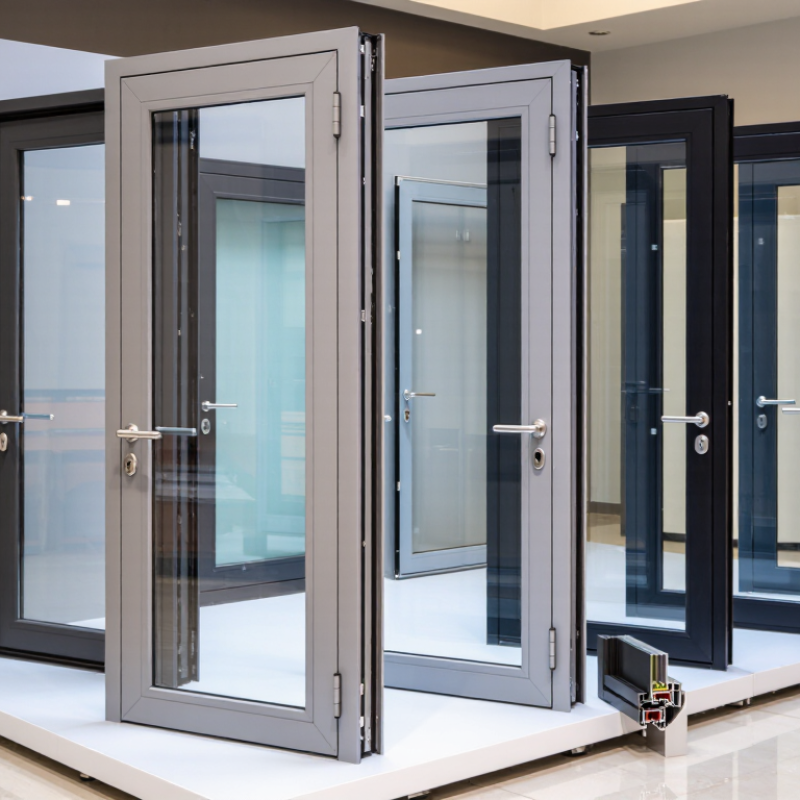
Aluminum doors with windows are door assemblies that combine a metal frame with one or more glass panels. The glass may sit beside the door, above it, or within the door leaf itself. Common designs include hinged entry doors and sliding patio doors. Clear glass brings daylight into a hallway; frosted or textured glass softens views while preserving light. A frame is not just a border. It supports the glazing, hardware, and seals that help manage drafts and water.

Thermal performance depends on the whole assembly, not aluminum alone. A thermal break—a low-conductivity strip between the frame’s inner and outer sections—can reduce heat transfer. Glass type, spacer design, weather seals, and installation also matter. The International Energy Agency’s 2023 Global Status Report for Buildings and Construction estimates that buildings use about 30% of global final energy. That figure covers buildings overall, not aluminum doors specifically, so it should not be read as a product-performance claim. Small details count. When comparing specifications, check tested air leakage, water penetration, structural performance, and glass safety ratings for the intended use. I would not assume a thicker frame is automatically better; poor seals can still leave a chilly line near the threshold.

Aluminum Doors With Windows: Frame Material Density

An aluminum door with a window combines a metal frame with glazed panels. This chart compares approximate densities of common frame materials; actual values vary by alloy, species, and formulation.

Approximate material densities: aluminum 2.70, steel 7.85, PVC 1.40, and hardwood 0.70 g/cm³. Density alone does not determine door strength, insulation, or overall performance.

How Is China’s Supplier Market Organized?

China’s aluminum door-with-window market is organized in layers, not as one uniform supplier list. Upstream producers make aluminum billets and extruded profiles; specialist firms supply glass, seals, and hardware. Fabricators then assemble finished units for projects, wholesalers, or export buyers. The National Bureau of Statistics reported 41.594 million tonnes of electrolytic aluminum output in 2023. That figure describes a broad upstream resource, not door and window production.

Downstream suppliers vary in scale and capability. Some focus on standard residential sizes, while others handle custom openings, thermal-break profiles, varied glazing, and project-specific finishes. The National Bureau of Statistics also reported construction-industry output of 31.59 trillion yuan in 2023, indicating a large building sector, though it is not a direct measure of window demand. Regional manufacturing clusters can shorten sourcing routes, but supplier names alone reveal little.

Look closely at the production chain. Ask whether the seller makes frames in-house or coordinates separate workshops. Request profile cross-sections, glass specifications, hardware details, and a physical sample with matching finish. Check how dimensions and packaging are confirmed before production. Small mismatches matter. This market is efficient, but its layered structure can blur responsibility when defects appear. A clear written scope helps identify who handles measurement, assembly, and after-sales service.

Who Are the Top Aluminum Door With Window Suppliers in China? — How Is China’s Supplier Market Organized?

Supplier Segment Typical Products Common Market Strengths What Buyers Should Verify
Integrated door-and-window manufacturers Aluminum entry doors, patio doors, sliding doors, and matching windows Can coordinate profiles, glazing, finishes, hardware, and production across a project; often suited to residential developments and whole-building packages. Whether the supplier manufactures the frames and assembles the finished units in-house; product drawings, test reports, quality controls, and project references.
Aluminum profile and fabrication specialists Cut, machined, and assembled aluminum frames, sometimes supplied with glazing and hardware May offer flexibility in profile selection and custom dimensions; can be a fit for buyers with established specifications or local glazing partners. Profile alloy and temper, wall thickness, surface-treatment specification, machining tolerances, and responsibility for final assembly.
Project-focused building-envelope suppliers Doors, windows, and related façade or curtain-wall components Typically work from construction drawings and project schedules; may provide technical coordination and product submittals for commercial or multi-unit projects. Experience with the project’s building codes, wind-load requirements, water and air performance, installation details, and delivery schedule.
Export-oriented manufacturers Residential and commercial aluminum doors and windows configured for overseas orders May have experience preparing export packaging, shipping documents, and specifications for different destination markets. Destination-country compliance, packaging for the shipping route, Incoterms, spare-parts arrangements, and clear allocation of installation responsibilities.
Regional production and sourcing clusters Products and components from manufacturers, fabricators, hardware vendors, and logistics providers China’s supplier base is organized partly around regional manufacturing networks. Guangdong, Zhejiang, and Shandong are among the provinces with substantial manufacturing activity, but capabilities vary by city and supplier. Confirm the actual production address, which processes are subcontracted, supplier capacity, and whether the quoted factory is the facility that will make the order.
Custom or made-to-order suppliers Non-standard sizes, opening styles, colors, glazing combinations, and project-specific configurations Can address requirements that differ from standard catalog products, subject to tooling, engineering, and minimum-order constraints. Approved shop drawings, sample approval, color and finish consistency, change-control procedures, and the effect of customization on lead time and cost.
How to compare suppliers Applies to all supplier segments Compare suppliers against the same bill of materials, performance requirements, drawings, and delivery terms rather than relying on a general “top supplier” label. Request verifiable business and factory details, references, relevant test documentation, written warranty terms, and a production sample or inspection plan.
Performance and compliance checks Frame, glazing, seals, hardware, and completed door-and-window assemblies Performance depends on the complete system and its installation, not just the aluminum frame. Requirements differ by climate, building type, and destination market. Check applicable local standards and project specifications for air leakage, water penetration, structural performance, thermal performance, safety glazing, and hardware.
This table describes supplier categories and sourcing considerations, not a verified ranking of individual companies. Regional presence and capabilities are general industry patterns and should be confirmed directly with each prospective supplier.

Which Chinese Suppliers Are Notable?

Notable Chinese suppliers of aluminum doors with windows are often distinguished by their production strengths, not by one universal ranking. In Guangdong, some manufacturers focus on custom residential systems and offer varied frame finishes, glazing options, and opening styles. Suppliers in other industrial regions may emphasize standardized production, shorter lead times, or larger project orders. Capabilities differ.

Look closely at how a supplier handles the details. Ask for section drawings showing frame depth, thermal breaks, glazing thickness, and drainage paths. Request photos of finished installations, not only polished catalogue images. A sample corner joint can reveal uneven coating or loose assembly. Small clues matter. Also confirm whether measurements, packaging, and installation guidance are included in the quotation.

A capable supplier should answer technical questions clearly and provide consistent specifications across drawings, samples, and final production. Ask how the glass is protected during shipping and how damaged components are documented. If possible, review a sample before approving a large order. This takes time, and it still cannot guarantee flawless delivery. I would compare several written quotations rather than trust the lowest price alone; overlooked hardware or finishing details can change the real cost.

How Can Buyers Compare Supplier Capabilities?

When comparing aluminum door with window suppliers, look beyond the catalog photos. Ask for drawings that specify frame depth, glass thickness, opening direction, and hardware. Request test reports for the exact door configuration, not a similar model. Check how the supplier verifies air and water resistance, and whether test results identify the tested size. Details matter.

Factory capability shows up in small things. Ask how frame corners are joined, how drainage paths are checked, and how coating thickness is inspected. A sample can reveal rough edges, uneven gaps, or a sash that drags when opened. Also confirm production capacity, typical lead times, and inspection records for each batch. One polished sample is not the whole story.

Compare quotations line by line: glass type, accessories, packaging, shipment terms, and warranty coverage. Ask who handles replacement parts and how defects are documented. Clear answers are useful, but vague promises deserve follow-up. Even a tidy spreadsheet can mislead if specifications differ. I would check one awkward detail twice: whether the quoted hardware suits the door’s weight and local use.

What Should Buyers Verify Before Placing an Order?

Before choosing an aluminum door supplier, ask for a drawing that states the opening size, frame depth, glass type, finish, and hardware. “Standard size” can mean different things across factories. Confirm tolerances in writing, especially for doors that must fit an existing opening.

Ask for recent test reports relevant to the product and your destination market. Check what was tested, when, and whether the report covers the same frame, glazing, and seals you plan to order. Request a physical sample or pre-production unit. Inspect the corner joints, coating, gasket fit, and locking action. Small flaws matter.

Look beyond the sample. Ask how the factory checks dimensions and finish during production, and whether it will share inspection photos or allow a third-party check before shipment. Clarify packaging, delivery timing, replacement-part availability, and warranty terms in the contract. Get references for comparable projects, not just a list of clients. One detail is easy to miss. A sample may look excellent, while batch consistency is less certain; I would verify that point rather than assume. Short written answers are useful, but clear records are better.

FAQS

What details should buyers request from a supplier?

Request drawings showing frame depth, thermal breaks, glass thickness, opening direction, and drainage paths. Small clues matter.

How can buyers check whether test reports are relevant?

Ask for reports covering the exact door configuration and tested size. A similar model may perform differently.

What can a physical sample reveal?

Inspect the corner joints, coating, gaps, and sash movement. A dragging sash or rough edge deserves attention.

How should buyers compare quotations?

Compare glass, hardware, packaging, shipment terms, and warranty coverage line by line. The lowest price may omit useful details.

What should buyers ask about production quality?

Ask how frame joints, drainage, and coating thickness are checked. Request inspection records for each production batch.

Does one good sample guarantee a good order?

No. A sample helps, but it cannot guarantee consistent production or flawless delivery. I might still miss something.

What should buyers confirm about delivery and damage?

Ask how glass is protected during shipping and how damaged parts are documented. Confirm whether replacement parts are available.

How can buyers judge a supplier’s technical support?

Look for clear, consistent answers across drawings, samples, and written specifications. Vague promises need follow-up. Not always easy.

Conclusion

An Aluminum Door With Window combines the strength and low-maintenance qualities of an aluminum frame with the daylight and visibility of glazed panels. China’s supplier market includes manufacturers with different production scales, product ranges, customization options, and service models, so buyers should first clarify the intended application, dimensions, glazing needs, and performance requirements.

When comparing suppliers, consider their manufacturing capabilities, material and hardware options, quality-control processes, communication, lead times, and ability to support custom designs. Before placing an order, confirm drawings, specifications, finishes, packaging, delivery arrangements, and warranty terms in writing. Request relevant product documentation and samples where practical, and make sure the final quotation matches the agreed requirements. A careful evaluation helps buyers identify a suitable supplier and reduce misunderstandings throughout production and delivery.

Liam

Liam

Liam is a dedicated marketing professional with a profound expertise in the industry, where he excels at highlighting the unique advantages of our core products. With a keen understanding of market trends and consumer needs, Liam frequently updates our company’s professional blog, providing......